Bedding · Styling & comfort
How Down Pillow Loft Shapes the Look and Feel of Textured Bedding
A pillow is both a place to rest your head and one of the bed’s most visible forms. Its loft influences support through the night, but it also determines whether a decorative sham looks softly sculpted, beautifully relaxed, or a little too tightly packed.
When the bedding includes matelassé, that distinction becomes especially noticeable. The raised weave catches light and gives a bed its quiet dimension; the pillow inside helps decide how that texture sits. Choosing well means considering sleep position and personal comfort first, then styling the sham around the pillow’s actual shape—not asking a decorative layer to make an unsuitable pillow look right.
Loft is more than height
In bedding, loft describes a pillow’s height and fullness when it is resting in its natural state. It is not a fixed measurement of comfort. A lofty pillow may compress substantially under the head, while a pillow that looks lower can feel comparatively supportive if its fill is more resilient or its construction holds its shape.
Down makes this relationship particularly nuanced. Clusters are light and pliable, so a down pillow can be gently fluffed, folded, and compressed. Its profile changes with use: it may look rounded and generous before bedtime, then settle as the sleeper’s head rests on it. Fill amount, chamber design, fabric, and the pillow’s overall dimensions all affect how that change feels.
That adaptability is part of down’s appeal, but it also means that a pillow’s appearance on a freshly made bed is not a reliable guide to overnight support. A dramatic, cloudlike silhouette may be pleasing to the eye yet feel too high for one sleeper. A softer, less elevated profile may be more comfortable, even if it looks less substantial behind a sham.
Think of the pillow as two things at once: a functional sleep surface and a shape within the room. The first should lead. Good styling follows comfort rather than competing with it.
Soft, medium, and firmer profiles
Descriptions such as soft, medium, and firm are useful starting points, but they are not universal standards. One maker’s medium pillow may feel different from another’s because fill blends, fill weight, dimensions, and construction vary. Where possible, look beyond the label and consider how the pillow is intended to behave under the head.
A soft down pillow
A soft pillow generally yields readily to pressure. It may suit sleepers who prefer a low, adjustable feel, including some stomach sleepers, though individual comfort and body proportions matter. Down can be shifted and compressed, allowing the sleeper to shape the pillow rather than meet a rigid surface.
On the bed, a softer pillow often gives a sham a looser, more informal outline. The corners may fall gently, and the fabric can show natural folds instead of stretching taut. With a textured matelassé cover, this can create an appealing interplay: raised pattern across the surface, softened edges around it. The effect is relaxed rather than overly arranged.
A medium down pillow
A medium profile is often chosen as a versatile middle ground, but its suitability still depends on sleeping position, mattress feel, and personal preference. Side sleepers commonly need more height to fill the space between the head and shoulder; back sleepers often prefer a more moderate profile. These are helpful general considerations, not rules that override comfort or individual needs.
For styling, a medium pillow tends to offer a balanced outline. It can provide enough body for a sham to display its woven motif while retaining some softness at the corners and edges. If you want a bed that feels composed without looking rigid, this may be a useful starting point—provided the pillow also supports your preferred sleeping posture.
A firmer or fuller pillow
A firmer pillow resists compression more than a soft one. Some sleepers appreciate that steadier feel, and a side sleeper may find a higher, more supportive profile comfortable. The right choice depends on the way the head and neck are supported when lying down, not on the height alone.
In a sham, extra fullness can create a crisp, upright shape. It may make a woven design look particularly defined, but there is a point at which the cover begins to look stretched. If the seams pull, the closure strains, or the surface loses its soft folds, the insert may be too large or too full for that sham. A polished bed should look inviting, not pressurized.
The sleep-position question
Personal comfort is the central guide when choosing pillow loft. Sleep position can help narrow the options, but bodies, mattresses, and preferences differ. A pillow that feels supportive on a firm mattress may feel different on a softer one, where the shoulder or body settles further into the sleep surface.
- Side sleepers often look for enough height to keep the head comfortably aligned with the spine, accounting for shoulder width and mattress softness.
- Back sleepers may prefer a moderate profile that supports the head without pushing it noticeably forward.
- Stomach sleepers often favor a lower, softer pillow, since a high profile can feel uncomfortable for the neck.
- Combination sleepers may value a pillow that can be reshaped during the night and feels comfortable across more than one position.
These are broad guides, not medical advice. If a pillow consistently causes discomfort, or if you have a health concern involving sleep or neck pain, consider seeking advice from a qualified professional. A decorative arrangement cannot compensate for a pillow that does not feel right when you lie down.
Why the insert changes the sham
A sham is designed to cover and frame a pillow, but the result depends on the relationship between the two. The insert gives the cover its volume; the cover determines how that volume is expressed. With matelassé, where a woven or quilted-looking surface carries much of the visual interest, the fit matters as much as the color.
An insert that is too small may leave the sham limp. The center can sag, the corners may collapse, and the pattern can lose definition as excess fabric gathers unevenly. That softer look can be intentional, especially in a layered, unstudied room, but it may appear untidy if the sham is meant to have a clear shape.
An insert that is too large can cause the opposite problem. Fabric pulls across the face, edges feel strained, and the sham’s texture may look flattened rather than dimensional. Seams and closures should not be under pressure. For envelope-style closures, check that the opening remains neatly overlapped and that the pillow stays enclosed without forcing the sham into a bulge.
The aim is a comfortably filled cover with a little give. The fabric should be smooth enough to show its design, but not so taut that it loses its natural drape. A well-fitted insert supports the sham’s shape; it does not turn the sham into a rigid casing.
Matelassé’s particular appeal
Matelassé is prized for surface and structure. Its raised patterns can suggest stitched or padded motifs while keeping the character of the cloth at the center of the design. Depending on the weave and finish, the face may look crisp and defined or soft and gently rumpled. Either way, a pillow’s loft influences the way those details read.
A well-proportioned pillow lets the weave sit in a natural plane. Light travels across raised areas and settles into the recessed parts, making the pattern visible without exaggeration. If the pillow is overfilled, the surface can curve sharply and distort the motif. If it is underfilled, folds may obscure the weave. The right balance lets texture remain the star.
Consider the difference between a finely structured sham and a more relaxed one. A jacquard surface with a distinct motif may benefit from an insert that gives it enough body to reveal the design. A rumpled, stonewashed texture can look especially appealing with a slightly softer fill that lets the fabric fall in easy folds. Neither approach is more correct; the choice is about how formal or casual you want the bed to feel.
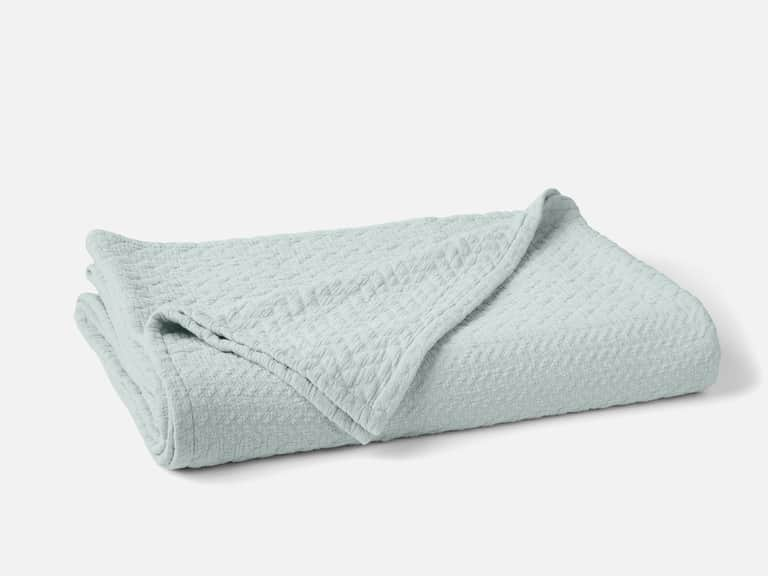
For a textural layer at the foot of the bed, the Angeles Organic Matelasse Blanket pairs a braided wave pattern with lightweight structure and a gauze-like underside. Its breathable, organic cotton construction offers a useful example of how matelassé can add visual depth without making a bedding arrangement feel heavy. It is a blanket rather than a pillow insert, so its role is to complement the bed’s layers, not determine pillow support.
A proportionate approach to the bed
Styling works best when each layer has room to be itself. Start with the pillows you actually sleep on, choosing fill and firmness for comfort. Then add decorative shams in a size that suits their inserts. If you use sleeping pillows inside the shams, check that the dimensions are compatible rather than assuming that a larger pillow will automatically create a better-looking result.
Next, consider the bed as a composition. A row of upright pillows can create a tailored backdrop; a softer arrangement feels more relaxed. A matelassé sham may be the focal texture, while a smoother sheet or duvet provides visual breathing room. A coverlet or blanket adds another plane of texture, but the overall effect should still feel calm rather than crowded.
Contrast can be subtle. Pair a raised woven pattern with smooth cotton sateen, crisp percale, or a simple solid-color layer. If several pieces have pronounced texture, vary their scale: a broad wave, a fine stripe, and a quieter plain weave are easier on the eye than multiple motifs competing at the same volume. Color also plays a part. Tonal layers let surface detail come forward; sharper contrast makes pattern more graphic.
Arrange pillows in a way that remains easy to maintain. Decorative pillows do not need to be stacked so high that they must be removed in a daily ritual before sleep. A considered bed can still be practical: the pillows used at night can be placed within easy reach, while any extra shams are kept to a manageable number.
A simple fit check
Before settling on an insert for a matelassé sham, give the combination a brief real-world test. Put the pillow inside, close the sham, and set it upright as it will sit on the bed. Then look at both the front and the edges.
- Check the corners. They should reach the sham’s corners without bunching into hard points or collapsing into empty pockets.
- Look at the face. The surface should show the woven design without excessive stretching or deep, accidental creases.
- Inspect the closure. An envelope or button closure should remain secure and lie flat rather than pulling apart.
- Compress and release. Down should respond to handling and regain some fullness, though the speed and degree vary by fill and construction.
- Test it on the bed. A pillow that looks good standing upright should also remain comfortable in the position in which you sleep.
If the sham feels overfilled, try a different insert size or fill profile instead of forcing the cover closed. If it looks slack, check that the insert matches the sham’s dimensions and that it has not become compressed through extended use. Refluffing may help down recover its loft, but it will not correct a fundamental mismatch in size or support.
Caring for fullness and texture
Every pillow has its own care requirements, so follow the manufacturer’s instructions for both the insert and the sham. Down pillows often benefit from regular airing and gentle fluffing, while washing and drying procedures vary by construction. Ensure a pillow is thoroughly dry after washing; lingering moisture can affect the fill and its freshness. Do not assume that the sham and insert can be cleaned in the same way.
For textured cotton bedding, gentler laundering can help preserve the fabric’s hand and appearance. For example, the Angeles Organic Matelasse Blanket is described as machine washable on a cold, gentle cycle with like colors, with low tumble drying and prompt removal. Always check the specific care label before washing; similar-looking textiles may have different finishes or instructions.
A sham that has been washed may feel different until it is fully dry and returned to shape. Smooth it gently along the seams, close the fastening properly, and insert the pillow without pulling sharply on the fabric. Thoughtful care supports both the texture you see and the comfort you feel.
The final balance
The most beautiful pillow arrangement is not necessarily the tallest or the most symmetrical. It is the one that feels inviting in the room and comfortable at night. Down’s softness and adaptability make it possible to shape a pillow to personal preference, while loft gives that shape its visible presence. Matelassé adds another layer of character, revealing its pattern through light, touch, and the way it rests on the bed.
Choose the pillow for your sleep position and comfort. Choose the insert-to-sham fit for a surface that looks composed but not strained. Then let the bedding layers work together: a tactile sham, a breathable blanket, and quieter fabrics that give the eye somewhere to rest. The result is not a bed dressed for display alone, but one whose elegance comes from being genuinely comfortable.
Frequently asked questions
Does a higher-loft down pillow always provide more support?
No. Loft describes a pillow’s height and fullness, while support depends on how it behaves under the head and whether that feel suits the sleeper. Fill amount, construction, sleep position, and mattress feel all matter.
How should a matelassé sham fit its insert?
The insert should fill the sham enough to show its texture and hold a pleasing shape, without stretching the seams or straining the closure. The ideal fit has some body and a natural drape.
Should decorative appearance determine pillow firmness?
No. Choose firmness and loft for sleep comfort first. Once the pillow feels right, select a sham and bedding layers that complement its shape and let the matelassé texture show naturally.