The Bedding Edit
Choosing Coyuchi Sheets: Weave, Fiber, and Fit Considerations
The right sheet is less a finishing touch than the quiet architecture of a bed. Fiber, weave, finish, and fit shape the feel of the hours spent beneath it—and determine how gracefully the fabric holds up to everyday life.
A considered guide to cotton sheet weaves, breathable textures, mattress depth, and the care that helps bedding feel beautiful beyond its first wash.
Begin with the feeling you want
Shopping for sheets can seem deceptively simple. A color catches the eye; a thread-count figure promises softness; a familiar fiber name sounds reassuring. But the experience of a sheet comes from several decisions working together. Fiber influences how cloth handles moisture and warmth. Weave affects its surface, drape, and airflow. Finishing can soften the hand or lend a relaxed character. Fit determines whether the fitted sheet stays composed across the mattress through the night.
For Coyuchi sheets—or any thoughtfully made bedding—the useful question is not simply, “Which set is best?” It is, “Which construction suits my room, my mattress, and the way I sleep?” A crisp sheet may feel refreshing to one person and too cool to another. A smooth, fluid weave may be a pleasure for someone who loves an elegant drape, but less appealing to someone who prefers a dry, textured hand.
That is why a sheet buying guide should begin with preference rather than a single headline number. Consider the bedroom’s temperature, whether you tend to feel warm or cool, how often you wash bedding, and whether your mattress has a topper. These practical details are not separate from style. They are what allow a beautiful bed to work beautifully.
Fiber: the material closest to the skin
Fiber is the foundation of a sheet’s character. Cotton remains a familiar bedding choice because it is comfortable against the skin, breathable, and adaptable to a range of weaves. Yet “cotton” alone does not tell the whole story. Yarn quality, finishing, fabric weight, and the way the cloth is constructed all contribute to its final feel. Two cotton sheets can behave quite differently even when their labels use the same broad fiber description.
When comparing cotton sheets, read the full material information rather than relying on shorthand. Look for the stated fiber content and any relevant certification details, and consider where the fabric was made if origin is important to you. A certification can help clarify what a product claims about its production standards, but it should be understood in the context of its stated scope. It does not replace practical questions about comfort, care, or fit.
Fiber also interacts with the sleeping environment. A lightweight cotton fabric with an open, breathable construction may feel appealing in a warm room, while a denser cloth can have a more substantial hand. Neither is universally superior. Personal comfort depends on the whole combination: room temperature, sleepwear, duvet weight, mattress materials, and the sleeper’s own preferences.
It is helpful to distinguish between a sheet’s fiber and its finish. A cotton fabric may feel crisp, smooth, soft, or gently rumpled depending on how it is woven and treated. Finishing can influence the first impression, while repeated laundering gradually changes the cloth. The most promising choice is often the one whose everyday texture you enjoy, not the one that sounds most luxurious in a product description.
Percale: crisp, light, and quietly tailored
Percale is commonly associated with a matte surface and a crisp, clean hand. Its balanced construction creates a fabric that feels less glossy than sateen and often has a light, airy character. For people who like the sensation of a freshly made hotel bed, percale may be an especially appealing direction: composed, cool to the touch, and uncomplicated in appearance.
That crispness is part of the appeal, but it is worth allowing for the fabric’s evolution. New percale can feel quite structured. With use and washing, it may soften while retaining much of its characteristic dry, smooth feel. It is not necessarily meant to feel plush straight from the package; its pleasure often lies in its freshness and in the way it settles over time.
Percale’s open, breathable quality can suit warm sleepers and bedrooms that retain heat, though no weave can guarantee a particular sleep temperature. The rest of the bed matters. A heavy duvet, a warm mattress topper, or limited room ventilation may have more influence on comfort than the sheet alone. Think of the sheet as one layer in a considered arrangement.
Visually, percale tends toward understated polish. It sits neatly on the bed, pairs easily with patterned quilts or textured coverlets, and offers a restrained backdrop for more expressive layers. For a bedroom that favors clean lines and an unforced sense of order, its matte finish can feel especially right.
Sateen: a smoother hand and fluid drape
Sateen is generally chosen for a smoother, silkier-feeling surface and a subtle sheen. The weave brings more yarn to the surface, creating a softer glide beneath the hand and a drape that can feel more fluid than percale. On a neatly made bed, that surface catches light gently, bringing a little polish without requiring ornament.
For sleepers who value softness above crispness, sateen can be an appealing choice. Its smooth hand feels inviting, and its drape can lend bedding a relaxed, graceful finish. The same qualities may make it feel warmer or more substantial than an airy percale, although individual experience varies with fabric weight and sleeping conditions. If you tend to sleep hot, pay attention to the specific fabric description and think about how it will work with your other bedding.
Because sateen has a more lustrous surface, it can also emphasize the color and character of the bed. A deep neutral may look especially rich; a pale shade may appear softly luminous. The effect is elegant but not necessarily formal. Paired with a tactile coverlet or a simple blanket, sateen can make a bedroom feel finished while keeping the overall mood relaxed.
As with any weave, care matters. Follow the product’s own instructions rather than assuming all cotton sheets should be washed identically. Gentle washing and avoiding excessive heat can help preserve fabric and color. A smooth finish is best maintained through consistent, appropriate care, not aggressive laundering intended to force immediate softness.
Jacquard and textured weaves: dimension without excess
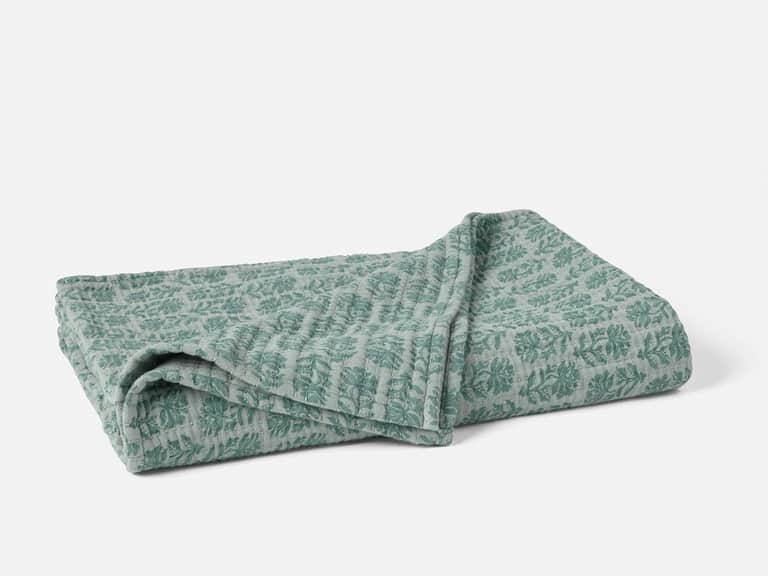
Not every sheet is defined by the familiar contrast between crisp percale and smooth sateen. Jacquard and other textured constructions bring pattern into the fabric itself, creating visual interest through the weave rather than relying only on a printed surface. Depending on the design, texture may be subtle enough to read as a quiet detail or pronounced enough to become a focal point.
Texture changes the mood of a bed. A woven motif can make plain bedding feel more considered, while a restrained pattern can add depth without competing with the room. When choosing a textured sheet, consider the rest of the scheme: the weave may echo a quilted layer, complement a plain duvet, or provide a gentle counterpoint to smoother fabrics.
Construction affects hand as much as appearance. Some jacquard fabrics feel smooth; others have a more tactile surface. Product descriptions can offer useful clues, but words such as “soft” and “substantial” remain subjective. If possible, compare fabric swatches or assess the feel in person. When that is not an option, use information about fiber, weave, weight, and finish together rather than treating any one adjective as a guarantee.
Textured bedding also benefits from sensible layering. If the sheets already have a visible pattern, choose a quieter coverlet or duvet; if the sheets are simple, a more expressive upper layer can introduce contrast. The aim is not perfect matching. It is an arrangement in which every surface has room to be appreciated.
Thread count is a detail, not a verdict
Thread count is one of the most prominent figures in sheet shopping, but it cannot fully describe quality or comfort. It refers to a count of threads within a given area of fabric, yet its meaning depends on how the yarns are counted and on the cloth’s overall construction. A larger number does not automatically mean a better sheet, a cooler night, or a softer hand.
Instead of treating thread count as a ranking system, use it as one piece of context. Fiber quality, weave, fabric weight, finish, and construction are all essential to the final experience. A breathable, well-made sheet with a moderate count may be more comfortable for a particular sleeper than a denser fabric with a higher number. The best comparison is the full specification, not a single figure in isolation.
Be wary of choosing by a number alone, especially when it is presented without clear information about the fiber or weave. A sheet’s usefulness is ultimately tested at home: whether it feels pleasant, fits securely, suits the room, and remains agreeable after laundering. Those measures are more meaningful than a label that promises an abstract form of luxury.
Finishing, softness, and the passage of time
A sheet’s finish shapes its first impression. Some fabrics are treated or washed to feel softer from the beginning; others arrive with a crispness that relaxes gradually. Garment washing or other finishing methods may give fabric a more lived-in appearance, while a smooth finish can lend a fresh, refined look. The exact effect depends on the fabric and the maker’s process.
It is useful to separate immediate softness from lasting comfort. A sheet that feels exceptionally soft at first touch is not automatically the most durable, just as a crisp new sheet is not necessarily uncomfortable. Cotton often changes with use: laundering can soften its hand, and regular handling can give it a more familiar drape. The way it changes is part of the decision.
Before buying, read care instructions carefully. Check the recommended water temperature, cycle, detergent guidance, drying method, and any cautions about bleach or ironing. If a set requires a routine that does not suit your household, its beauty may be less practical than it seems. The ideal sheet should fit not only the bed but also the rhythm of your life.
Wash new sheets before use if the care label allows, and avoid overcrowding the machine. Too much detergent or overly hot drying can be hard on fibers over time. Remove bedding promptly from the dryer when possible, and fold or place it on the bed before creases become deeply set. These small habits help preserve the appearance of the fabric without turning laundry into a ceremony.
Fit begins with measuring the mattress
A beautiful flat sheet cannot compensate for a fitted sheet that slips from the corners. Before choosing a set, measure the mattress and account for everything that sits on top of it. Mattress depth varies, and a topper adds height. The fitted sheet must accommodate the combined profile, not simply the mattress’s advertised dimensions.
Measure from the mattress surface down to the base, including any topper or protective pad that will remain in place. Compare that measurement with the fitted sheet’s stated pocket depth. Where a sheet includes an elasticized or deep-pocket design, confirm the manufacturer’s dimensions rather than relying on the name alone. A close match helps the sheet stay secure without excessive strain on the seams.
Also verify the mattress size and the set’s included pieces. Standard size names are useful, but dimensions can vary by region and manufacturer. If your mattress is unusually deep, pillow-top, or paired with a thick wool topper, precise measurements become even more important. An inch or two may determine whether the sheet lies smoothly or pulls free during the night.
Consider how the sheet is meant to be used. Some sleepers prefer a snug, taut fitted surface; others want a little more ease. The flat sheet should provide enough width and length for the way you make the bed, whether you tuck it tightly or leave a generous fold. If you share a bed, additional coverage can make a practical difference to comfort.
Good fit is discreet. It does not draw attention to itself, and that is precisely the point. Corners stay in place, the surface remains reasonably smooth, and the layers above sit naturally. A few minutes with a tape measure can spare the frustration of a set that looks right on paper but never quite settles on the bed.
Match the weave to your sleeping preferences
There is no universal winner among cotton sheet weaves. The best choice depends on what you notice most when you climb into bed. If a cool, crisp touch is your priority, begin by considering percale. If a smooth surface and fluid drape matter more, explore sateen. If pattern and tactile dimension are central to your bedroom, compare jacquard or other textured constructions.
Room temperature offers another useful guide. A warm bedroom and a tendency to overheat may point you toward a lighter-feeling construction, while a cooler room may make a smoother or more substantial fabric appealing. These are starting points, not rules. Pairing a breathable sheet with a heavy comforter may still feel warm; switching to a lighter top layer could have a more noticeable effect.
Think about how you sleep as well. If you move frequently, a secure fitted sheet and a fabric with a comfortable drape may be especially important. If you prefer a meticulously made bed, a crisp, matte surface can support that look. If your style is softer and more relaxed, a smooth or gently rumpled finish may feel more natural.
Finally, remember that the sheets are part of a whole ensemble. Mattress protectors and toppers change the hand of the surface beneath you. Blankets and duvets influence warmth. Pillowcases bring the fabric closest to the face and hair. When possible, consider the set as a coordinated system rather than a disconnected purchase.
A measured approach to color and styling
Color is often the first thing a shopper notices, and rightly so: sheets occupy a broad plane in the bedroom and set the tone for everything layered above them. White and natural shades feel calm and adaptable; muted colors bring atmosphere without overwhelming a room; deeper tones can create a more intimate, cocooning effect. The most versatile choice is the one that works with your existing bedding and still feels appealing after the initial excitement fades.
Consider the way the weave changes color. A matte percale may read as crisp and straightforward, while a smoother surface can reflect light more softly. A textured weave introduces small shifts in shadow that give a solid color depth. If you are combining patterns, vary scale and surface: a fine woven motif can sit comfortably beneath a larger print or beside a plain coverlet.
A polished bed does not require a complete matching set in every visible layer. It often feels more personal when materials are allowed to differ. A crisp sheet, a tactile coverlet, and a simple duvet can create balance through contrast. Keep the palette intentional, but do not confuse coordination with sameness.
A practical checklist before you choose
Before adding a sheet set to your shortlist, use a few straightforward questions to move beyond packaging and first impressions:
- What fiber is used, and is the full composition clearly stated?
- Which weave best matches your preference: crisp, smooth, or textured?
- Does the fabric description provide information about weight, finish, and care?
- Have you measured the mattress together with its topper and protector?
- Does the fitted-sheet pocket depth match the complete mattress profile?
- Are the set’s dimensions and included pieces suitable for your bed?
- Can you comfortably follow the washing and drying instructions?
- Will the color and surface work with the layers you already own?
These questions are deliberately practical. A sheet’s quality is not an abstract promise; it is the sum of details that affect everyday use. Clarity about fiber and construction makes comparison easier. Accurate measurements help the fitted sheet perform. Care instructions reveal whether the fabric’s needs align with your habits.
The quiet luxury of a well-chosen sheet
Good bedding has a particular kind of presence: it makes a room feel composed without asking to be admired. A well-chosen sheet contributes through touch, temperature, drape, and the ease with which it stays in place. Its appeal is intimate rather than theatrical, measured in the small pleasure of a smooth corner, a breathable surface, or a fabric that has softened just enough with time.
When choosing Coyuchi sheets, begin with the material and the texture you genuinely enjoy. Compare the character of percale, sateen, and woven patterns, but treat those categories as guides rather than guarantees. Look beyond thread count to the complete construction. Measure the mattress, include the topper, and review care before making a decision. Each step narrows the field toward a set that feels considered rather than merely desirable.
Ultimately, the right sheets are not the ones with the most persuasive specifications or the most elaborate description. They are the ones that make the bed feel like yours: comfortable through the seasons, suited to the room, and easy to care for in real life. In that sense, choosing bedding is less about chasing a perfect number than understanding the details that make a nightly ritual feel quietly exceptional.